Company Overview
Enter Boost is a low-code SaaS platform that enables consultants to build custom business applications for small and medium-sized businesses without developing every application from scratch. The platform is designed around the idea that software should adapt to the way a business works, instead of forcing every business into the same standard process.
Because each customer has its own processes, data model and workflows, Enter Boost gives consultants the flexibility to configure applications around the operational reality of that customer.
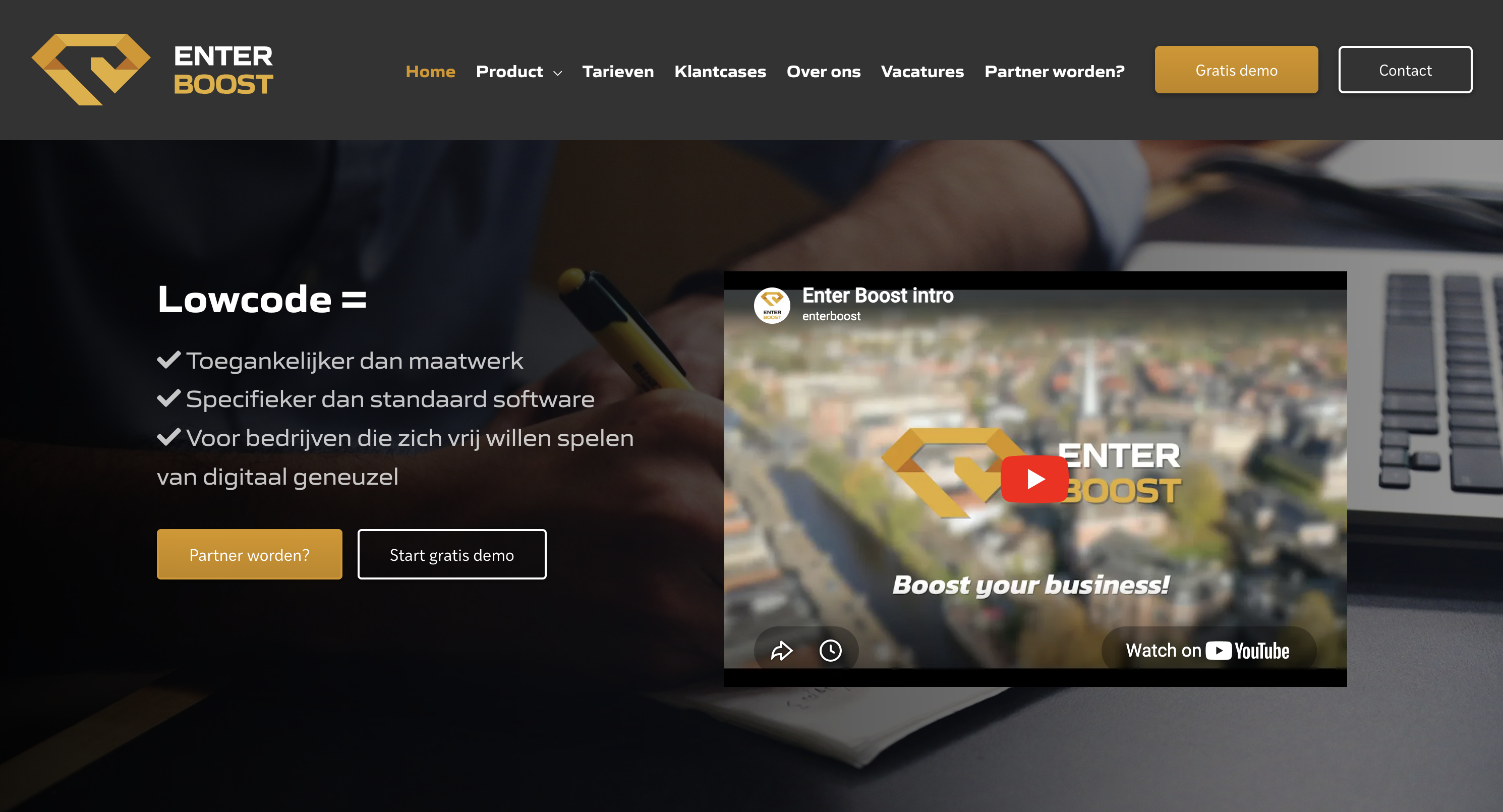
Built on .NET Core and Angular and hosted on Microsoft Azure, Enter Boost gives consultants the tools to define data models, build custom pages, configure business logic, set up integrations and run background jobs. Every client gets a dedicated environment with its own database, allowing consultants to configure a tailored business application while still working from one reusable platform foundation.
The Challenge: Generating Business Documents Across Many Different Client Applications
Because every Enter Boost application is specific to a client, the documents those applications need to produce are different. One client might need invoices and quotations, another might need delivery notes and product labels, and a client running an import or manufacturing business might need detailed purchase orders with customs information and multiple delivery destinations.
Enter Boost needed a document generation solution that could support all of these cases from one reusable platform integration. The goal was to avoid building and maintaining custom output logic for every client, every document type and every variation in document layout.
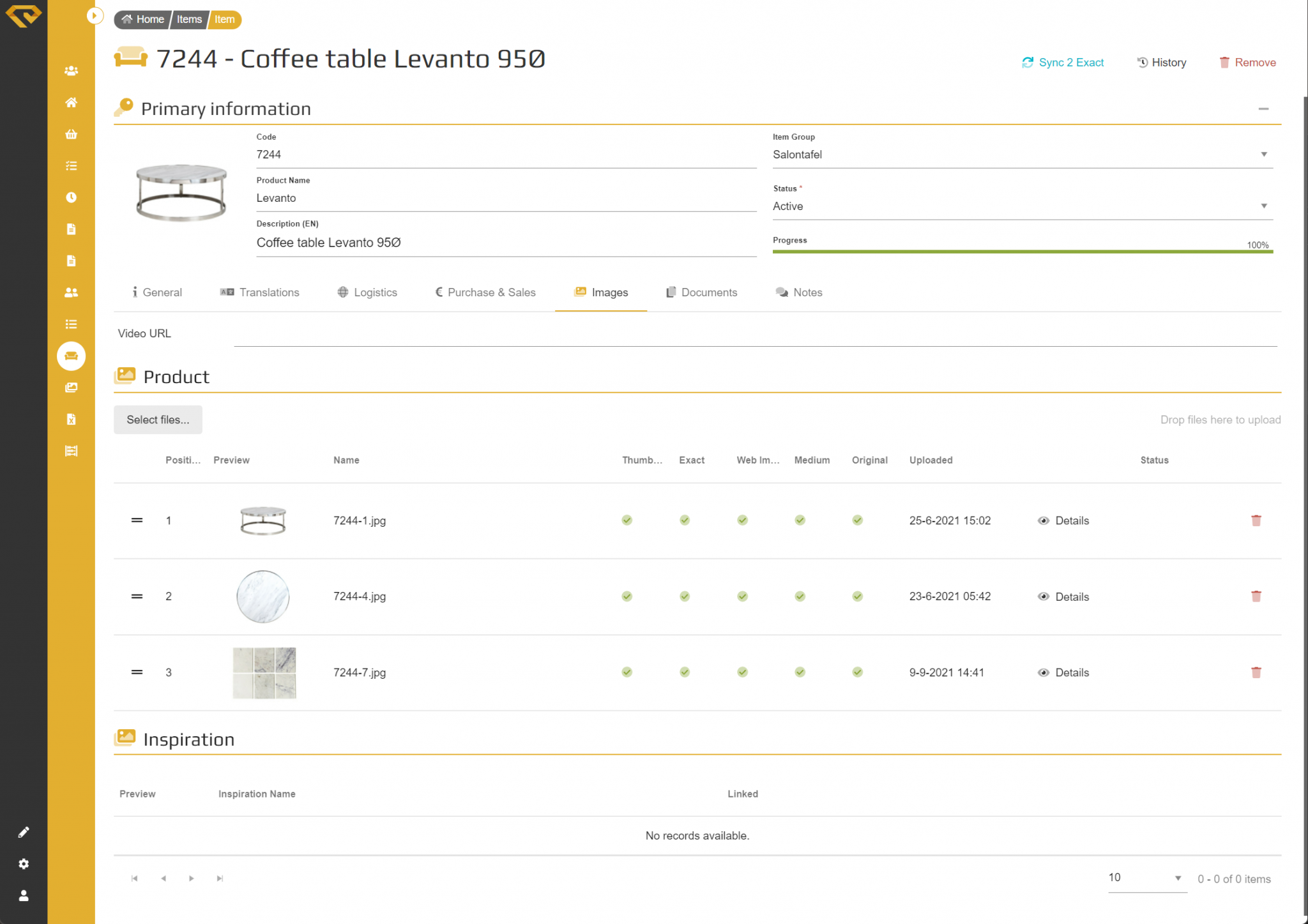
The other constraint came down to who would actually be building and maintaining the templates. Enter Boost’s consultants are not necessarily developers, and many clients want to make changes to their own document layouts over time. A solution that required writing code or learning a proprietary template format would have added unnecessary friction. The document generation workflow needed to fit the same low-code philosophy as the rest of the Enter Boost platform: understandable for consultants, maintainable by customers and flexible enough for complex business documents.
Some of the documents involved were also structurally complex. A purchase order, for example, might need to list several delivery warehouses, each with its own set of line items, alongside product fields that only apply to certain types of goods, such as fabric colors or customs tariff codes. Producing this kind of document reliably meant finding a tool that could handle nested, repeating data without turning the template itself into something only a developer could maintain.
The Solution: A Single API Integration Powering Templates for Every Client
Enter Boost integrated DocuGenerate’s API directly into its platform, giving every custom application access to the same document generation engine. Because the integration happens once at the platform level, consultants can enable document generation for a new client by uploading a Word template and connecting it to the data already captured in that client’s application. This keeps the implementation focused on the customer’s document structure and data, rather than on building new document-generation code.
Since templates are built directly in Microsoft Word, consultants and clients can design and adjust document layouts themselves. The purchase order template below illustrates how far this flexibility extends, handling a document structure complex enough to route a single order across multiple warehouses.
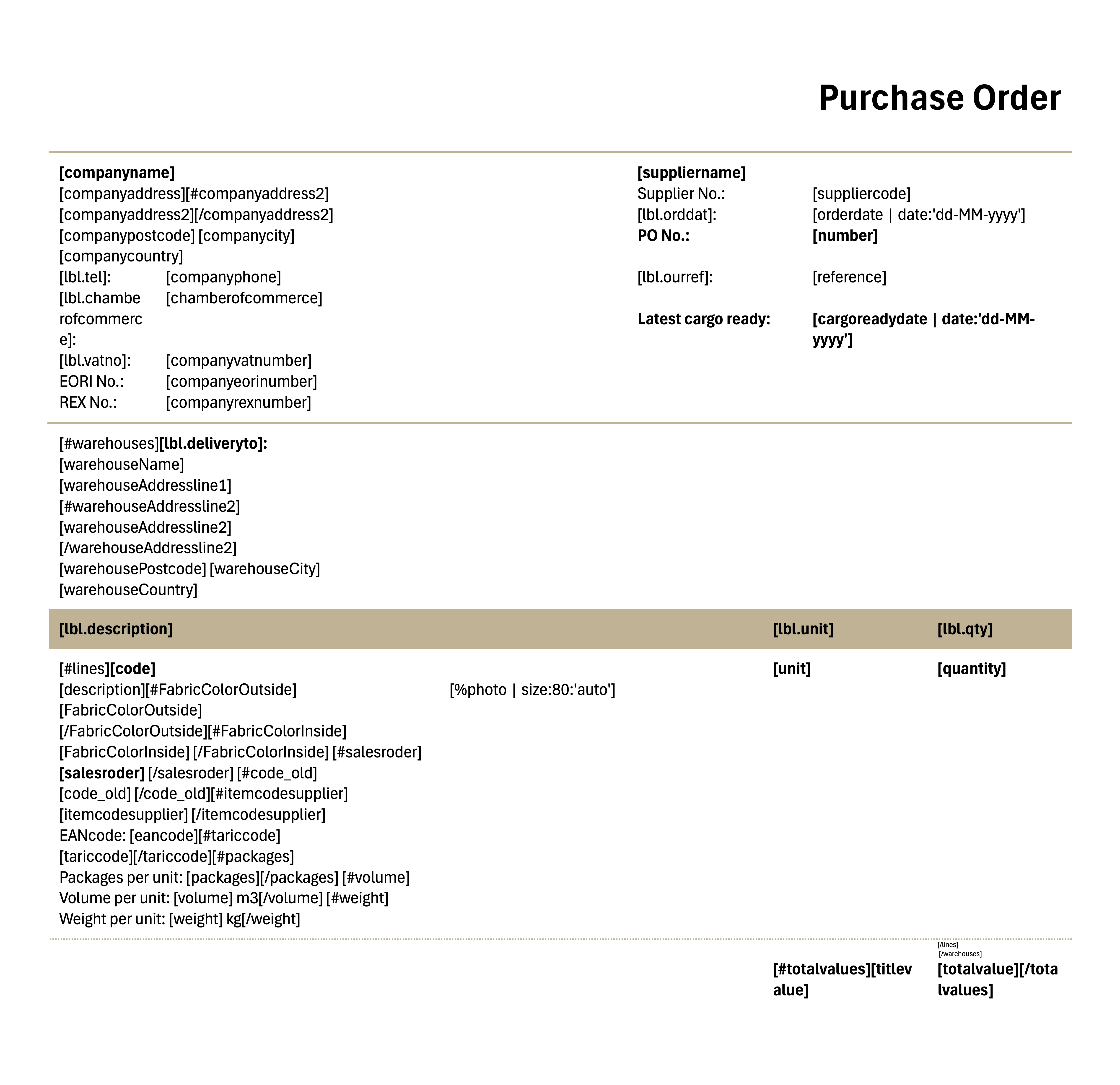
The [#warehouses] and [#lines] sections are nested repeating tables, allowing a single purchase order to list multiple delivery warehouses, each with its own set of ordered items. Fields that only apply to certain products, such as [FabricColorOutside] or [FabricColorInside], are wrapped in conditional sections so they only appear on the document when that data is present, and each line item includes a product photo using an image merge tag. Dates such as the order date are formatted consistently across every document using filters, for example [orderdate | date:'dd-MM-yyyy'].
The Results: One Integration, Many Document Types
With document generation plugged into the platform, Enter Boost now offers it as a standard capability across client applications. Across its customer base, Enter Boost uses DocuGenerate for dozens of templates and more than ten thousand generated documents per month, including invoices, proforma invoices, quotations, purchase orders, order confirmations, delivery notes and product labels.
All of these documents are generated from the same underlying platform approach and API integration. Templates can be maintained by both consultants and customers, which has prevented a significant amount of custom output code that would otherwise have been needed for different clients, layouts and document types.
For Enter Boost’s clients, the benefit shows up directly in the documents themselves. They get consistent formatting, branding and data output, while still being able to adjust templates when business requirements change. For Enter Boost, the benefit is scalability: new document types can be added by configuring templates instead of writing and maintaining custom code for each case.
Onboarding a new client onto document generation now comes down to building a Word template rather than writing integration code, which keeps document generation in step with Enter Boost’s low-code approach as its client base continues to grow.
Conclusion
By integrating with DocuGenerate, Enter Boost turned document generation into a reusable platform capability that can be offered across clients and document types. Word-based templates keep creation and maintenance within reach of consultants and customers, while features such as nested tables, conditional sections and image tags provide the flexibility needed for complex business documents.
This makes DocuGenerate a strong fit for Enter Boost’s low-code approach: one API integration, many document types and enough flexibility to support the specific way each customer works. As Enter Boost continues to power custom applications for a growing number of businesses, having a document generation engine that adapts to each client’s specific documents, rather than requiring a new solution for each one, remains a central part of how the platform delivers on its low-code promise.
DocuGenerate is exactly what we needed. The API was easy to integrate into Enter Boost, and we now use it to generate invoices, delivery notes, order confirmations, purchase orders and many other documents directly from our platform. The Word-based templates are understandable for consultants and customers, which makes them much easier to create, adjust and maintain over time. It gives us the flexibility we need, scales well across our client base and prevents a lot of custom document-generation code. If document generation is part of your software product, DocuGenerate is a solution I would seriously recommend.